Trace in the Air
Interactive Installation / Sound / Airflow / Projection / 2025-2026.8
Background
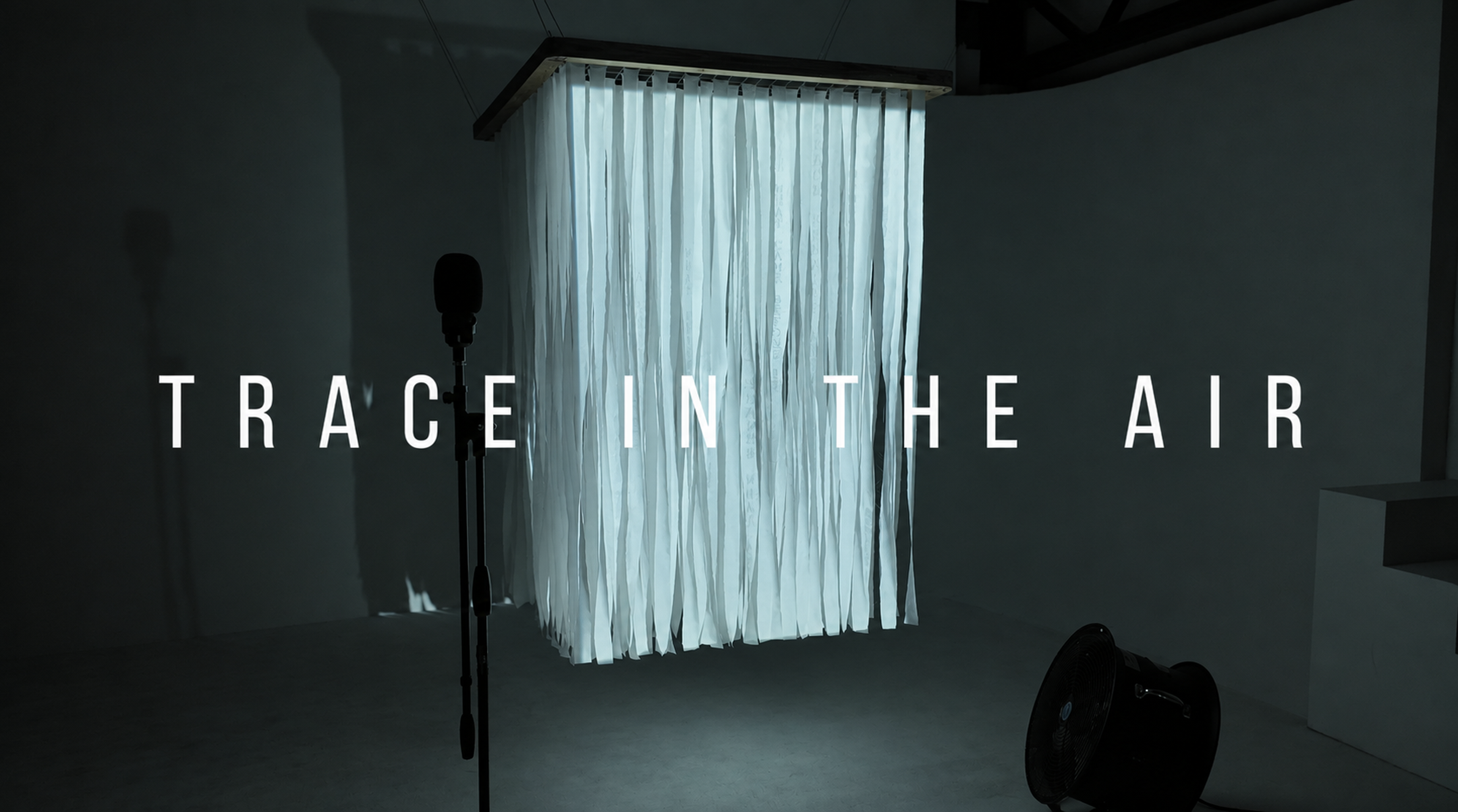
Trace in the Air began with a simple question: what remains after someone has spoken?
Rather than focusing on the specific meaning of language, the project looks at voice as a temporary event — something that appears, enters a space, travels through it, and gradually disappears. I became interested in how something that is no longer physically present might still continue to affect what happens next.
The project therefore explores sound through ideas of memory, delay, presence, absence, and physical residue.
Research
The research developed around Jacques Derrida’s concept of the trace, particularly the relationship between presence and absence.
Derrida’s idea of the trace suggests that what is absent does not simply disappear, but can continue to shape the present. This became an important conceptual basis for the use of recording and delayed playback within the installation.
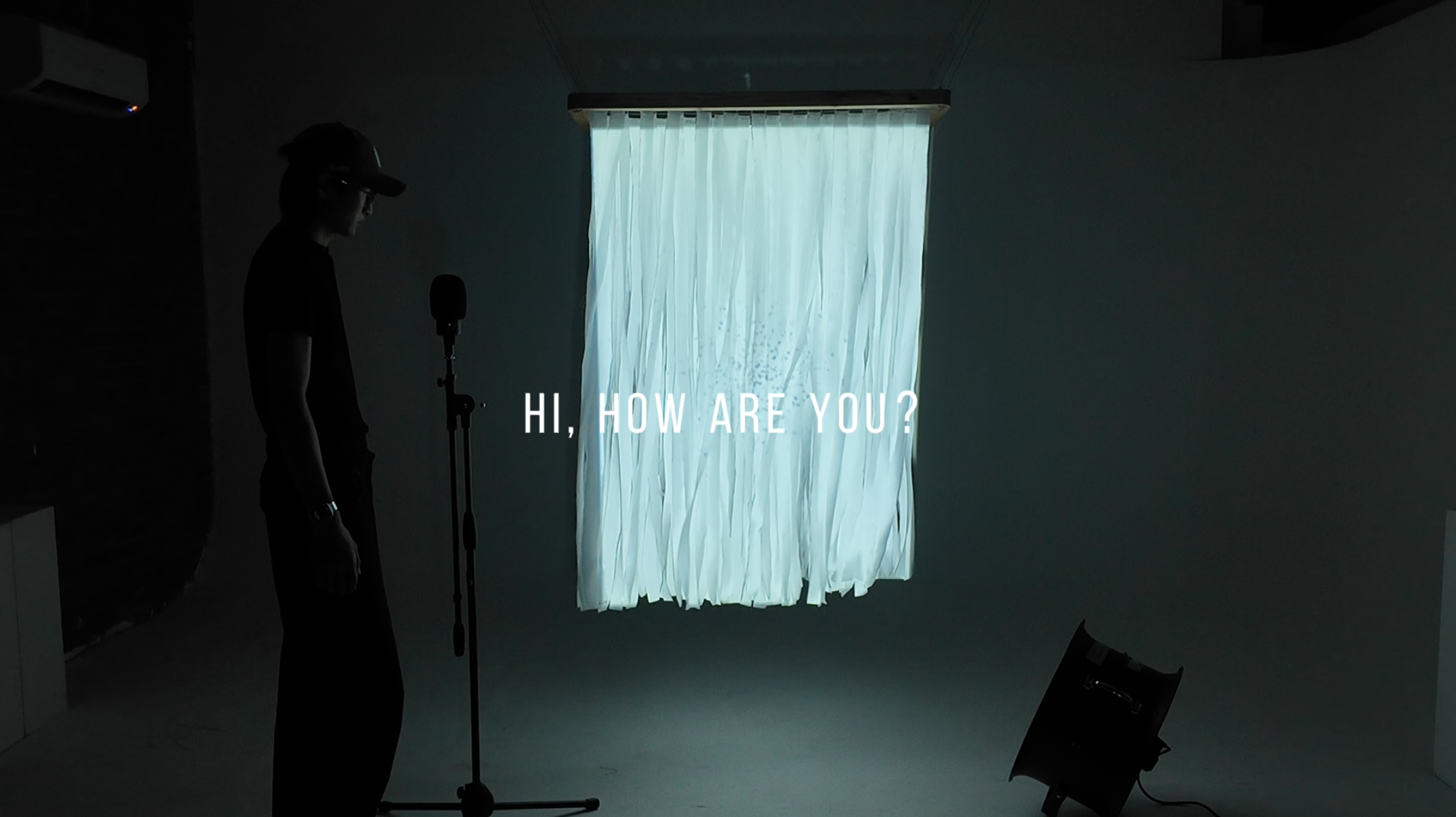
I also explored the physical qualities of sound and air. Both are largely invisible, yet they can be perceived through the effects they have on bodies and materials. This led me to experiment with suspended fabric as a way of making airflow, movement, and the after-effects of sound visible.
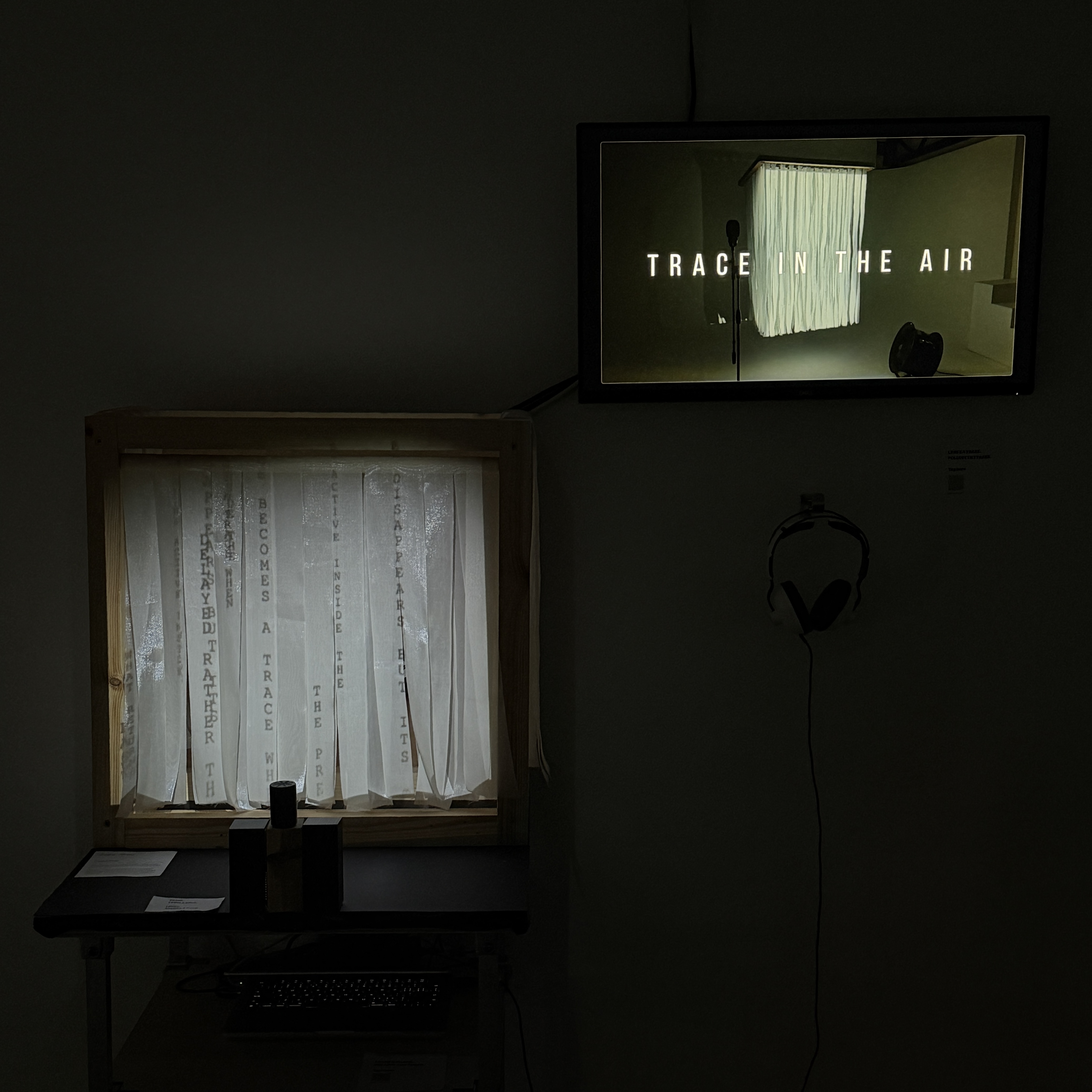
I extended this research into the visual system. The projected text rain is composed of text fragments taken from or adapted from Derrida’s writings and ideas around trace, presence, and absence. Rather than transcribing what participants say, the text functions as visual material — continuously falling, fading, accumulating, and disappearing within the space.
Design
The installation combines recorded sound, delayed playback, airflow, suspended fabric, and real-time projected visuals.
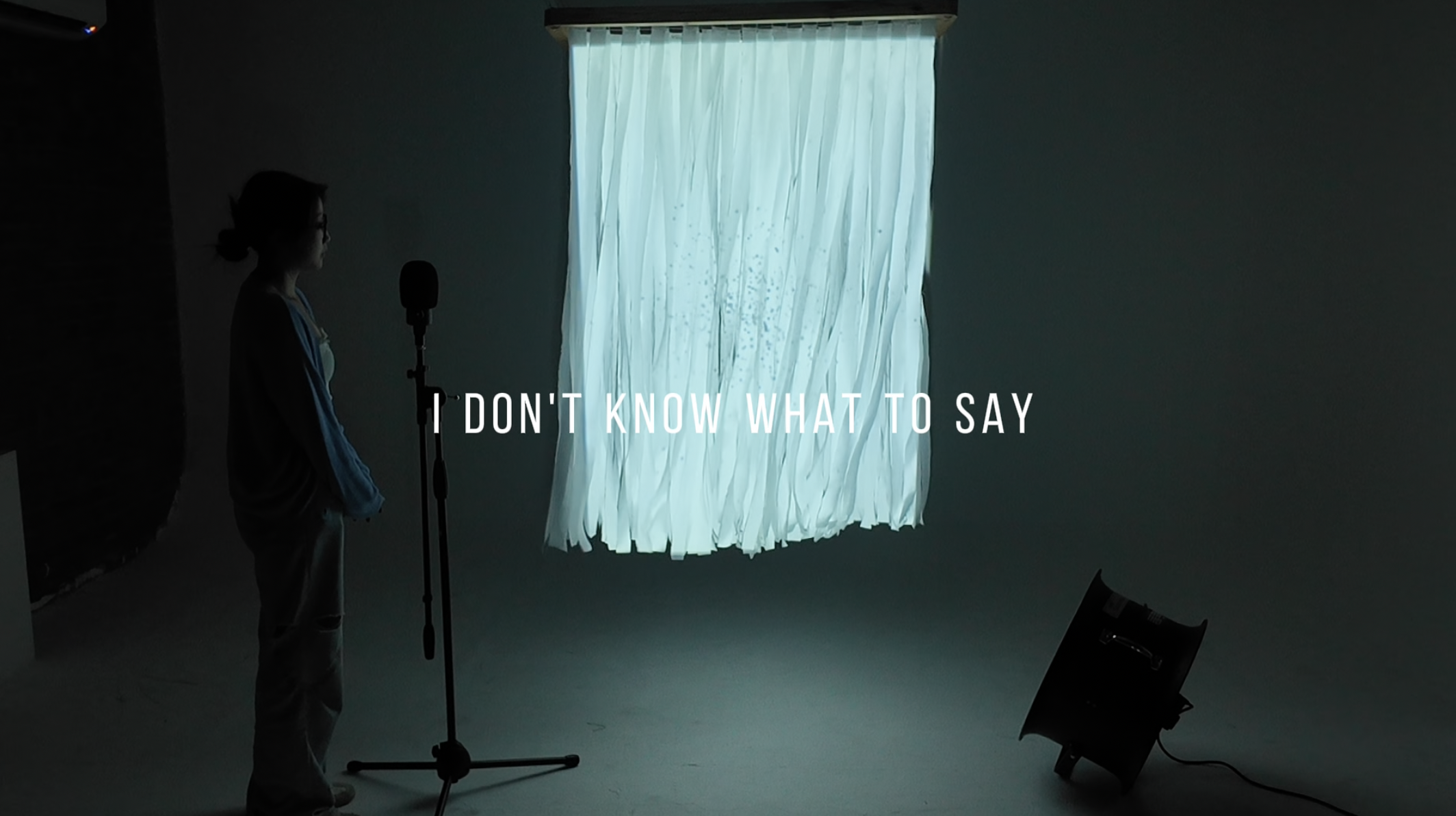
Participants speak into the system, where their voices are recorded and later played back. The sound also affects the projected visuals and activates fans, causing the suspended fabric to move.
In its resting state, the projection appears as a continuous field of falling text. When interaction is triggered, the text begins to transform, gradually breaking apart and reorganising into particle-based forms. This transformation does not directly illustrate the meaning of the participant’s speech, but instead represents its effect as a shifting visual trace.
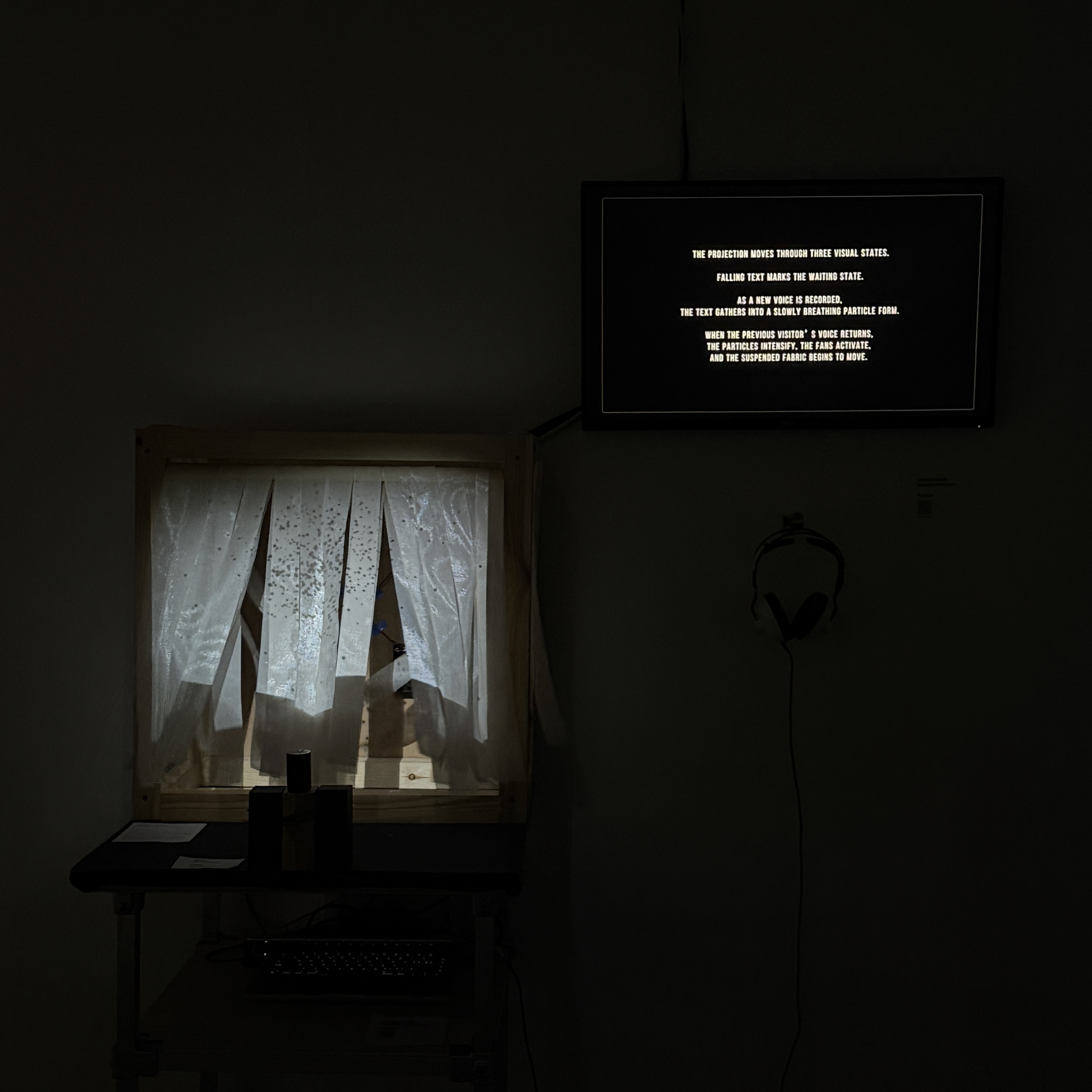
Rather than simply visualising sound, the design allows a voice to move through several different forms: from speech to recording, from recording to delayed sound, and then into airflow, fabric movement, and the transformation of text into particles.
Delay is central to the experience. Participants do not always receive an immediate response to their own actions; they may instead encounter traces left by a previous voice. In this way, even when the original speaker is no longer present, their voice can continue to affect the space.